


As a supplier of telescopic boom forklifts, one of the most frequently asked questions from our customers is about the replacement frequency of tires on these machines. Tires are a critical component of any forklift, and on a telescopic boom forklift, they play an even more significant role due to the unique operating conditions and load - handling requirements. In this blog, I'll discuss the factors that influence tire replacement intervals and provide some general guidelines to help you make informed decisions.
Factors Affecting Tire Replacement Frequency
1. Usage Intensity
The amount of time a telescopic boom forklift is in operation has a direct impact on tire wear. Forklifts used in high - volume industrial settings, such as large warehouses or construction sites with continuous operations, will experience more rapid tire wear compared to those used occasionally. For example, if a forklift is used for 8 hours a day, 5 days a week, the tires will be subject to more stress and abrasion than one used only a few hours a month.
2. Operating Surface
The type of surface on which the telescopic boom forklift operates is another crucial factor. Rough, uneven, or abrasive surfaces like gravel, construction sites, or unpaved roads can cause significant tire damage. The sharp edges of gravel can cut into the tire tread, while the constant jolting on uneven ground can lead to internal damage. On the other hand, smooth, indoor warehouse floors are much gentler on tires, resulting in slower wear.

3. Load Capacity
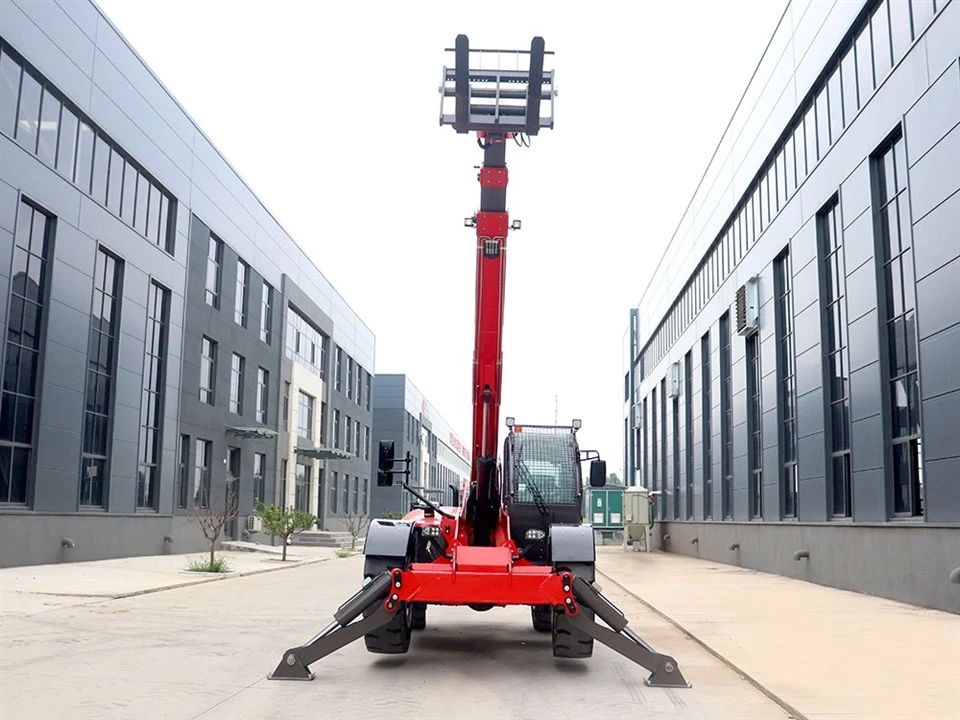
Telescopic boom forklifts are designed to handle various loads. Overloading the forklift can put excessive stress on the tires, leading to premature wear. Each forklift model has a specified load capacity, and consistently exceeding this limit can cause the tires to deform, reduce their lifespan, and even pose a safety risk. For instance, our T4007 - Type Telehandler has a specific load - handling capacity, and operators should always adhere to it to ensure proper tire performance.
4. Tire Quality
The quality of the tires themselves is a major determinant of their replacement frequency. High - quality tires are made from better materials and have more advanced tread designs. They are more resistant to wear, punctures, and cuts. When purchasing a telescopic boom forklift, it's advisable to consider the quality of the tires that come with it or invest in high - quality replacement tires.
5. Maintenance
Proper tire maintenance can significantly extend the life of the tires. This includes regular tire pressure checks, rotation, and alignment. Incorrect tire pressure can cause uneven wear. For example, under - inflated tires can lead to increased sidewall wear, while over - inflated tires may wear out the center of the tread more quickly. Tire rotation helps to distribute the wear evenly across all tires, and proper alignment ensures that the tires roll straight, reducing unnecessary friction.
General Guidelines for Tire Replacement
1. Tread Depth
One of the most straightforward ways to determine if tires need replacement is by checking the tread depth. Most manufacturers recommend replacing tires when the tread depth reaches 2/32 of an inch. You can use a tread depth gauge to measure the depth at multiple points on the tire. A worn - out tread can reduce traction, especially on wet or slippery surfaces, increasing the risk of accidents.
2. Visual Inspection
Regular visual inspections are essential. Look for signs of cuts, bulges, cracks, or uneven wear on the tire surface. Cuts and bulges can indicate internal damage, while uneven wear may be a sign of alignment or suspension issues. If you notice any of these signs, it's a good idea to consult a professional or consider replacing the tire.
3. Operating Hours
As a rough estimate, for a telescopic boom forklift used in normal operating conditions (moderate usage on smooth surfaces), tires may need to be replaced every 1,500 - 2,000 operating hours. However, this can vary widely depending on the factors mentioned above. For example, a forklift used in harsh conditions may need tire replacement every 500 - 1,000 hours, while one used sparingly may go 3,000 hours or more before replacement.
4. Age of the Tires
Even if a tire has not reached the recommended tread depth or shown significant signs of wear, it may still need to be replaced due to age. Rubber deteriorates over time, especially when exposed to heat, sunlight, and oxygen. Most tire manufacturers recommend replacing tires that are more than 6 - 10 years old, regardless of their appearance or usage.
Case Studies
Let's take a look at some real - world examples to illustrate how different factors can affect tire replacement frequency.
Case 1: Warehouse Use
A company uses our T4014 - Type Telehandler in a large, indoor warehouse. The forklift is used for about 4 hours a day, 5 days a week, and operates on smooth concrete floors. The operators regularly check the tire pressure and perform basic maintenance. In this case, the tires lasted for approximately 3,000 operating hours before reaching the minimum tread depth.
Case 2: Construction Site Use
Another customer uses our T5014 - Type Telehandler on a busy construction site. The forklift is in operation for 8 hours a day, 6 days a week, on rough, gravel - covered ground. The load capacity is often near the maximum limit. Despite regular maintenance checks, the tires needed replacement after only 800 operating hours due to excessive wear and several punctures.
Importance of Timely Tire Replacement
Timely tire replacement is not only important for safety but also for the overall performance of the telescopic boom forklift. Worn - out tires can reduce the forklift's stability, traction, and maneuverability. This can lead to longer stopping distances, difficulty in turning, and an increased risk of skidding. In addition, using worn tires can put additional stress on other components of the forklift, such as the suspension and steering system, potentially leading to more expensive repairs.
Conclusion
Determining how often to replace the tires on a telescopic boom forklift is a complex decision that depends on multiple factors. By considering usage intensity, operating surface, load capacity, tire quality, and maintenance, you can get a better idea of when your tires need replacement. Regular inspections and following the general guidelines mentioned above will help you ensure the safety and efficiency of your forklift.
If you're in the market for a telescopic boom forklift or need more information about tire maintenance and replacement, we're here to help. Our team of experts can provide you with detailed advice based on your specific needs. Contact us to start a discussion about your procurement requirements and find the best solution for your business.
References
- Forklift Safety Manuals from Industry Standards Organizations
- Tire Manufacturer's Technical Guides
- Case Studies from Our Customers' Experiences


