


Hey there! As a supplier of telescopic fork loaders, I often get asked about the weight of these machines. It's a crucial factor, whether you're looking to transport them, operate them on certain surfaces, or just understand their overall capabilities. So, let's dive right in and explore what affects the weight of a telescopic fork loader and what you might expect.
Why Does Weight Matter?
First off, why should you care about the weight? Well, it impacts a bunch of things. For starters, if you need to move your telescopic fork loader from one job site to another, you've got to know its weight to ensure you've got the right transport equipment. A too - heavy loader might require a more powerful truck or trailer, and you could even run into legal weight limits on roads.
Secondly, the weight affects how the loader interacts with the ground. If you're working on a weak or unstable surface, a heavy loader could sink or cause damage. On the other hand, a certain amount of weight can be beneficial as it provides stability, especially when lifting heavy loads at height.
Factors Affecting the Weight of a Telescopic Fork Loader
There are several things that contribute to the weight of these machines.
Size and Capacity
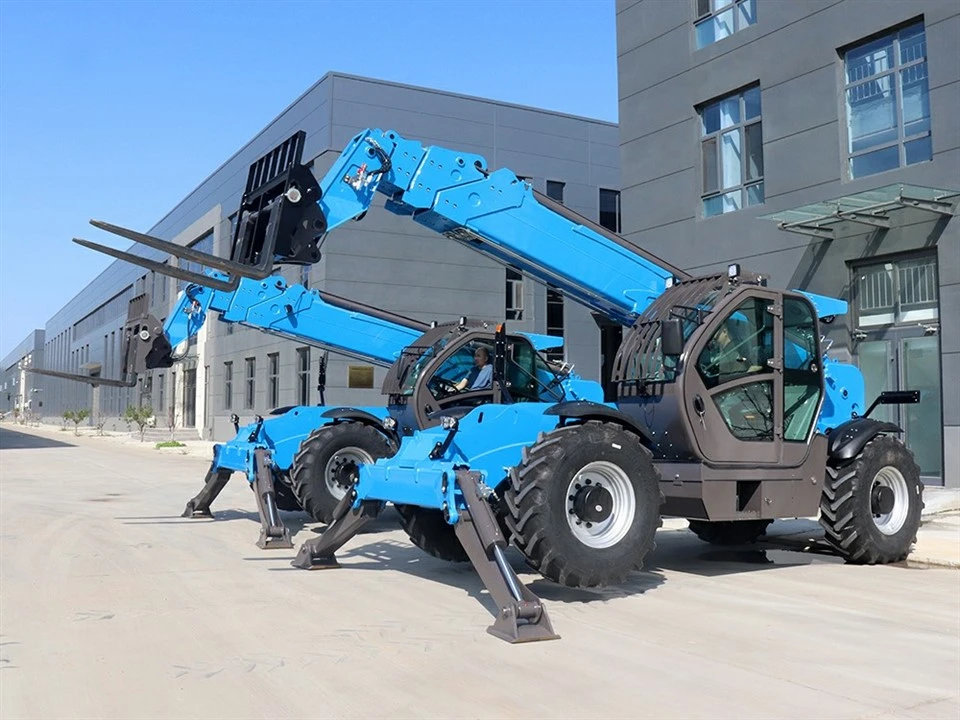
The most obvious one is the size of the loader and its lifting capacity. Generally speaking, the bigger the loader and the more weight it can lift, the heavier it will be. A small, compact telescopic fork loader designed for light - duty work will weigh less than a large, heavy - duty model built for industrial applications.
For example, our T3007 - Type Telehandler is a relatively small and nimble machine. It's great for jobs where space is limited, like in a small warehouse or a tight construction site. Because of its smaller size and lower lifting capacity, it weighs in at a relatively light amount compared to our larger models.
On the other hand, our T5018 - Type Telehandler is a beast. It's built to handle heavy loads and reach great heights. With a higher lifting capacity and a larger frame to support it, it's significantly heavier.
Construction Materials
The materials used in the construction of the telescopic fork loader also play a big role in its weight. Most loaders have a steel frame, which is strong and durable but also heavy. Some manufacturers might use lighter materials in certain parts of the machine to reduce weight without sacrificing too much strength.
For instance, the boom of a telescopic fork loader is a major component. If it's made of high - strength steel, it can be both strong enough to lift heavy loads and relatively lightweight compared to a boom made of a lower - grade steel.
Attachments
Attachments can add a significant amount of weight to the loader. If you're using a bucket, a fork extension, or a special lifting attachment, you've got to factor that into the overall weight. Different attachments have different weights, so make sure you know what you're adding on.
Typical Weight Ranges
Let's talk about some typical weight ranges for telescopic fork loaders. Keep in mind that these are just rough estimates, and the actual weight can vary depending on the specific model and configuration.
Light - Duty Loaders
Light - duty telescopic fork loaders, like the ones used in small - scale construction or agricultural work, usually weigh between 3,000 to 5,000 kilograms. These loaders are designed to be maneuverable and easy to transport, so they're on the lighter side. Our T3007 - Type Telehandler falls into this category. It's a great option if you're looking for a cost - effective and lightweight solution for your light - duty tasks.
Medium - Duty Loaders
Medium - duty loaders are a bit more heavy - duty. They're often used in larger construction sites, industrial yards, or for more demanding agricultural applications. These loaders typically weigh between 5,000 to 8,000 kilograms. The T3510 - Type Telehandler is a good example of a medium - duty loader. It offers a good balance between lifting capacity and weight, making it suitable for a wide range of jobs.
Heavy - Duty Loaders
Heavy - duty telescopic fork loaders are the big boys. They're designed for the toughest jobs, like large - scale construction projects, mining operations, or handling extremely heavy loads. These loaders can weigh anywhere from 8,000 kilograms and up. Our T5018 - Type Telehandler is a heavy - duty model that can handle some serious weight. It's built to last and perform in the most challenging environments.
Understanding the Impact of Weight on Performance
The weight of a telescopic fork loader isn't just about transport and ground interaction. It also affects the machine's performance.
A heavier loader generally has more stability when lifting heavy loads at height. This is because the weight provides a counterbalance to the load being lifted. However, a heavier machine might also be a bit slower and less maneuverable compared to a lighter one.
On the other hand, a lighter loader can be more agile and easier to move around, but it might have limitations when it comes to lifting heavy loads or working on uneven terrain.
Making the Right Choice
When choosing a telescopic fork loader, it's important to consider the weight based on your specific needs. If you're working in a small space with light loads, a lighter loader might be the way to go. But if you're dealing with heavy loads and need maximum stability, a heavier, more powerful model is probably what you need.
We're here to help you make the right decision. Our team of experts has a wealth of knowledge about our telescopic fork loaders and can guide you through the selection process. Whether you need more information about the weight, the lifting capacity, or any other features, just give us a shout.

Wrapping Up
So, there you have it! The weight of a telescopic fork loader is influenced by factors like size, construction materials, and attachments. It's an important consideration that can impact everything from transport to performance.
If you're in the market for a telescopic fork loader, take the time to think about your requirements and how the weight of the machine will fit into your operations. And if you've got any questions, don't hesitate to get in touch. We're ready to help you find the perfect loader for your job.
Let's start talking about your telescopic fork loader needs today. Whether you're a small - scale business or a large industrial company, we've got the right solution for you. Get in touch and let's start the conversation for a successful procurement!
References
- Industry reports on telescopic fork loader specifications
- Manufacturer's product manuals for T3007 - Type, T3510 - Type, and T5018 - Type Telehandlers


